 Driving Safety Tip of the Month
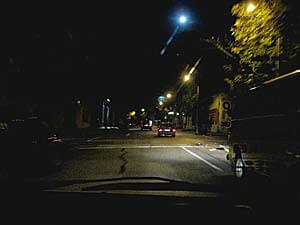
Most people dislike driving at night, and the reason is simple—it’s more difficult to do safely than by day. More than half of all motor vehicle deaths occur at night, the most dangerous hours being 1:00 a.m. to 3:00 a.m., Sunday morning (many of these accidents are alcohol-related). There are certain things you can do, knowledge you can master, and techniques you can use to make safer night driving second nature.
- Before you embark at night, check to see headlights, tail lights and directional signals are working.
- Keep your headlights and windshield clean (inside and out).
- Have your headlights adjusted periodically for proper aim.
- When you come out of a lighted building at night, it takes a few minutes for your eyes to adjust to the dark. Give yourself a two- five-minute wait before driving.
- Don’t wear sunglasses at night. Any lens that reduces the brightness of headlights also reduces the light reflected from dimly lit objects at the side of the road, including pedestrians.
- Don’t smoke while driving at night. Smoking is not just an obvious distraction; two chemicals in cigarette smoke, nicotine and carbon monoxide, can reduce your night vision.
- About turning on your headlights: If you wonder whether or not it’s dark enough to do so, it is. Although they may not help you see much better in early twilight, your glowing headlights will make it much easier for other drivers to see you as dusk falls.
- Switch you lights from high to low beam when an oncoming vehicle is about 500 feet away. Also, use only low beams when you’re within 300 feet (the length of a football field) of the rear of the vehicle you’re following).
- Since you can’t see as well at night, increase your following distance, and drive more slowly.
- According to one study, the time of least alertness for most drivers is between 2:00 a.m. and 7:00 a.m. To stay alert, wise options include keeping your windows somewhat lowered; stopping for a rest or mild exercise every two hours; and changing drivers.