The winter storms in the northeast have dumped as much as 40 inches of snow in New England. If you add rain to the accumulated snow, that may also lead to ice and all that weight can lead to the possibility of your roof collapsing.
“If possible, use a snow rake to try to remove what you can safely from the ground,” says Dr. Tim Reinhold, IBHS senior vice president for research and chief engineer. “Flat roofs are the biggest risk when it comes to snow and ice accumulations. These types of roofs also are the most difficult when it comes to clearing off the snow and they may not drain as well once the snow begins to melt. The best advice is to hire a contractor to clear the roof.”
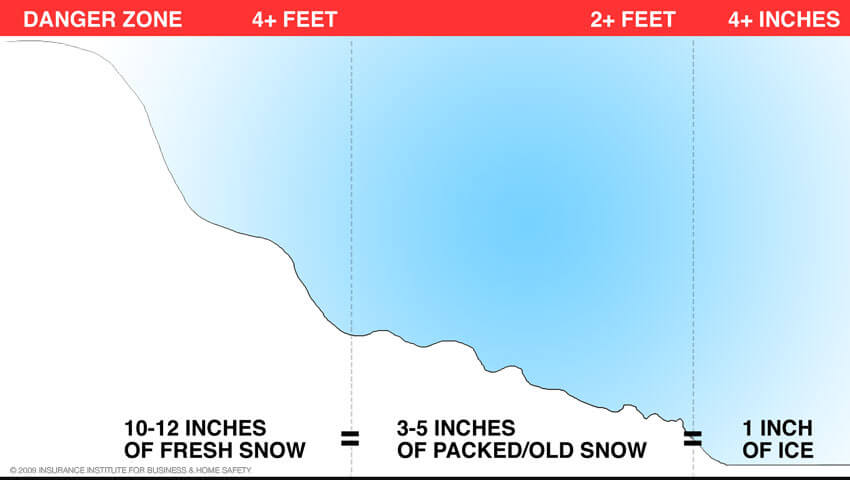
An article on DisasterSafety.org also says that if your roof is still covered following a snowstorm, use the IBHS guidelines below to help determine how much weight could be bearing down on your roof:
 Fresh snow: 10-12 in. of new snow is equal to one in. of water, or about 5 lbs per square foot of roof space, so you could have up to 4 ft. of new snow before the roof will become stressed.
- Packed snow: 3-5 in. of old snow is equal to one inch of water, or about 5 lbs per square foot of roof space, so anything more than 2 ft. of old snow could be too much for your roof to handle.
- Total accumulated weight: two ft. of old snow and two ft. of new snow could weigh as much as 60 lbs per square foot of roof space, which is beyond the typical snow load capacity of most roofs.
- Ice: one in. of ice equals one ft. of fresh snow.
So while you clear the snow from your driveway and sidewalk, don’t forget about your roof as it may prevent unnecessary property damage.